How To Find Exercise You Like

Is exercise guilt haunting you?

Find it hard to motivate yourself to stick to your routine? Or, maybe you are feeling guilty about blowing off your workout for another activity you enjoy more. If you are struggling with your exercise routine, maybe it’s not right for you.

There are many ways to exercise. Unfortunately, formal and more restrictive workouts have been promoted as the way to get the fittest, healthiest, and best looking body.

This couldn’t be farther from the truth.

Have you ever noticed how fit most surfers, horseback riders, or hikers look? These are examples of people who use recreation to stay fit. They usually spend very little time on formal exercise — just enough strength training per week to keep them in top shape for what they truly enjoy — their sport!

Choosing activities that are more recreational in nature is really good for your body. Recreational activities tend to move the body in more natural ways than some of the more formal “workouts” in the gym. Moving your body in a sport-like manner serves the purpose of improving function in your every day lifestyle activities.

So, while you are having fun and burning calories, you are actually improving your functional fitness as well.  Functional fitness is really important because it trains your body for “real life” situations.

Find exercise you like — the best exercise for you!

1) Ask yourself what you  enjoy. What do you like to do that’s physical? Give YOUR answer. Avoid saying what you think your friends or personal trainer wants to hear. It’s usually something you either did in the past or have a desire to try. I’ve had clients tell me everything from paint ball to line dancing. The most important thing is finding something physically active you will do consistently.

2)  What do you REALLY want? So often we let the media influence us to think we should look like the model on the cover of a magazine. Remember, they get paid for it. While most of us love our work, we all have a “chore” that we endure because it’s part of our job, or part of creating a better product. This is the same for celebrities. Many of them look at their formal workout as “part of the job.”

Copying another person’s life isn’t very motivating! Try different things and see what you gravitate towards. What exercise makes you feel the most energized? Evaluate anything that feels like a chore to see if it’s worth doing.

3)  Just go for it! The most important thing is that you get moving. No matter what you choose, if you know you can stick to it than it is the right exercise for you. The ideal exercise program will feel more recreational in nature and less formal.

4)  Do not feel guilty! We all have that friend that does marathons or bike rides 100 miles. That’s great! They’re wired that way! Do NOT feel guilty that your idea of “working out”is a stroll around the waterfront and picking up a coffee. Focus on your own health and fitness goals and be a cheerleader for them. That type of intense activity is not for everyone.

It’s important to remember that it doesn’t matter what the latest and greatest workout fad promises. The best workout for you is the one you will actually do. Finding something you enjoy — or can at the very least stay consistent with is key.

I encourage you to get creative. Step outside the box and have some fun!

Have an exercise routine that you enjoy and would like to share? Please comment below! I enjoy hearing from you!

Blessings!

Jennifer
 

Healthy Seasonal Foods For Fall

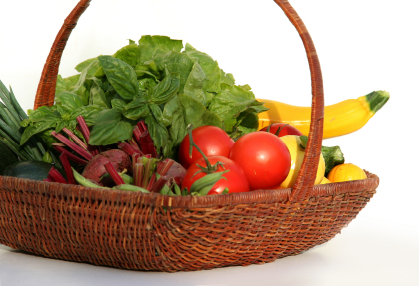
The Fall season is officially here!  And, the new season brings a great variety of fruits and vegetables that can help you stay on track with your healthy eating plan without compromising great taste!

Explore local farmer’s markets, roadside stands, and grocery stores for an abundance of good eats this time of year.  To help you get started, here’s a list of in-season fruits and vegetables and ideas on how to incorporate them in your weekly diet.

Try these tasty fruits and vegetables for fall!

1) Apples.  Harvest Season: August-November.

Apples make great on the go snacks.  Use them in salads, with savory dishes like pork chops; or chop them up and put them in yoghurt.

2)  Dates.  Harvest Season: September-December.

Dates are great in baked goods. Try chopping up a few for your oatmeal or over the top of frozen yoghurt.  For savory dishes, look for low-cal middle eastern recipes that include dates.

3)  Grapefruit.  Harvest Season: September-April.

Add over greens or squeeze fresh for a healthy juice.

4)  Kiwi.  Harvest Season:  September-March.

Kiwis are a great add to spice up a fruit salad or a smoothie.

5)  Pears.  Harvest Season: August-February.

Pears are one of my favorites because they are so versatile.  This fruit is great as a snack, added to mixed greens, used in savory dishes, or poached with a bit of cinnamon for a low-cal healthy dessert.

6)  Tangerines.  Harvest season:  November-April

Add these sweet little low-cal treats to yoghurt, pack in lunches, snack on them, use as dessert, or add to a salad.

7)  Brussel Sprouts.  Harvest Season: September-March.

I must confess, it took me awhile to like these wonderful little cabbages.  Now, they are one of my favorites this time of year! Try roasting brussel sprouts with olive oil, or sauteing with butter and garlic.  Serve with roasted meat and mashed potatoes.

8)  Cauliflower:  Harvest Season: September-June.

Use cauliflower to make fantastic soups, in stir-fries, or steamed with other vegetables as a side. Chop up cauliflower with other veggies and serve with a low-cal yoghurt dip for parties.

9) Squash.  Harvest Season:  October-February

There are so many varieties of squash and ways to prepare them. Try them steamed,  stir-fried, or in soups.  I’ve even used butternut squash to make a low-cal bechamel sauce!

10)  Pumpkin.  Harvest Season:  October-February.

Pumpkin is used mostly in desserts like pies and cakes. You can use it for waffles, pancakes, and breads.  Search for low-cal substitutes of these sweeter treats and keep portions in check.

11)  Sweet Potatoes.  Harvest Season:  September-December.

Not just for Thanksgiving Day anymore. Roast them. Make mashed sweet potatoes, or baked french fries.  If you’re cooking for 1-2 people, save time in the kitchen by microwaving a large sweet potato.

12)  Turnips.  Harvest Season:  September-April.

Try these tasty root vegetables roasted with olive oil or in stews.

13)  Parsnips.  Harvest Season:  October-April.

Add parsnips to other root vegetables and puree for a sweeter soup, or roast with potatoes and carrots for a wonderful blend.

14)  Rutabaga.  Harvest Season:  October-April.

Honestly, I haven’t cooked with this one yet.  I discovered it when researching my list for this article.  It’s a cross between a turnip and a cabbage.  Suggested uses include  roasting, or adding to casseroles and soups along with turnips and carrots.  I’ll report. You decide!

Decide which fruits and vegetables you’d like to incorporate into your healthy eating plan and use low-cal recipes that include these foods as ingredients.  You can find great low-cal seasonal recipes in Cooking Light  and Eating Well magazines.

Have fun experimenting with healthy seasonal foods. Browse your produce stand and farmer’s market.  When eating out, ask your food server what’s fresh — and depending where you live — ask what’s local on the menu.

Please feel free to share any great recipes or snack ideas you come up with.  I want to hear from you!

Blessings!

Jennifer


How To Snack And Lose Weight

Like to have your mid morning or afternoon snack? Good! Having a snack or two during your day will help you lose weight and keep it off for good.

Eating small and mid sized meals throughout the day is a great way to stabilize your blood sugar, avoid over eating, and keep your mind alert. So here’s how to snack and lose weight.

Snacking Wisely

The number of calories you will want in your snacks is going to vary depending on your weight loss goals and the amount of calories consumed during your daily meals. Pairing a carbohydrate and a protein gives your body the short and long term fuel it needs to sustain you until your next meal.

Ten healthy snacks to help you lose weight!

1)  Fruit.  Fruit is low in calories and makes a great snack when paired with a slice of cheese or a tablespoon of peanut butter.

2)  Tortilla Chips and Salsa. Yes, this can be a low-cal snack if you check the bag to determine a serving.  Since Salsa is very low in calories, I like to have 1/4 cup of yoghurt with it.  This is a great snack in the afternoon.

3)  Cheese and crackers.  Sounds fattening?  Not really when you eat a single serving. Pre-sliced cheese is a great way to control the calories.  Break it into pieces and eat with whole wheat crackers.

4)  Yogurt.  Yoghurt with fruit or a small amount of honey makes a great low-cal snack.

5)  Whole wheat toast and a tablespoon of peanut butter or slice of cheese.

6)  Leftovers.  A 1/2 serving of a low cal meal makes a great snack.

7)  Frozen Yoghurt.  Make sure it’s small and go light on the sprinkles.

8)  Shakes.  I don’t endorse meal replacement shakes as I prefer to make my own low cal smoothies. But for people on the go, shakes can be a great option for a low-cal snack.

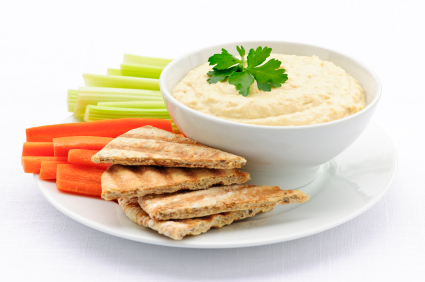
9)  Hummus.  Whole wheat pita chips and hummus is one of my favorites! Hummus is great for satisfying hunger, and a good whole wheat pita chip will give you the complex carbs you need for energy.

10)  Cottage Cheese.  Pair  1/2 cup cottage cheese with fruit or crackers for a great snack.

While cookies, candy, and potato chips are labeled as “snack foods”, they have a high calorie count and do not keep you filled up for very long.  It’s best to think of these foods as “treats.

Have a low cal snack you’d like to share?  Please leave a comment below.  I’d love to hear from you!

Blessings to you and yours!

Jennifer